Roman Cremation Urn, c. 1st - 3rd Century A.D., Terracotta
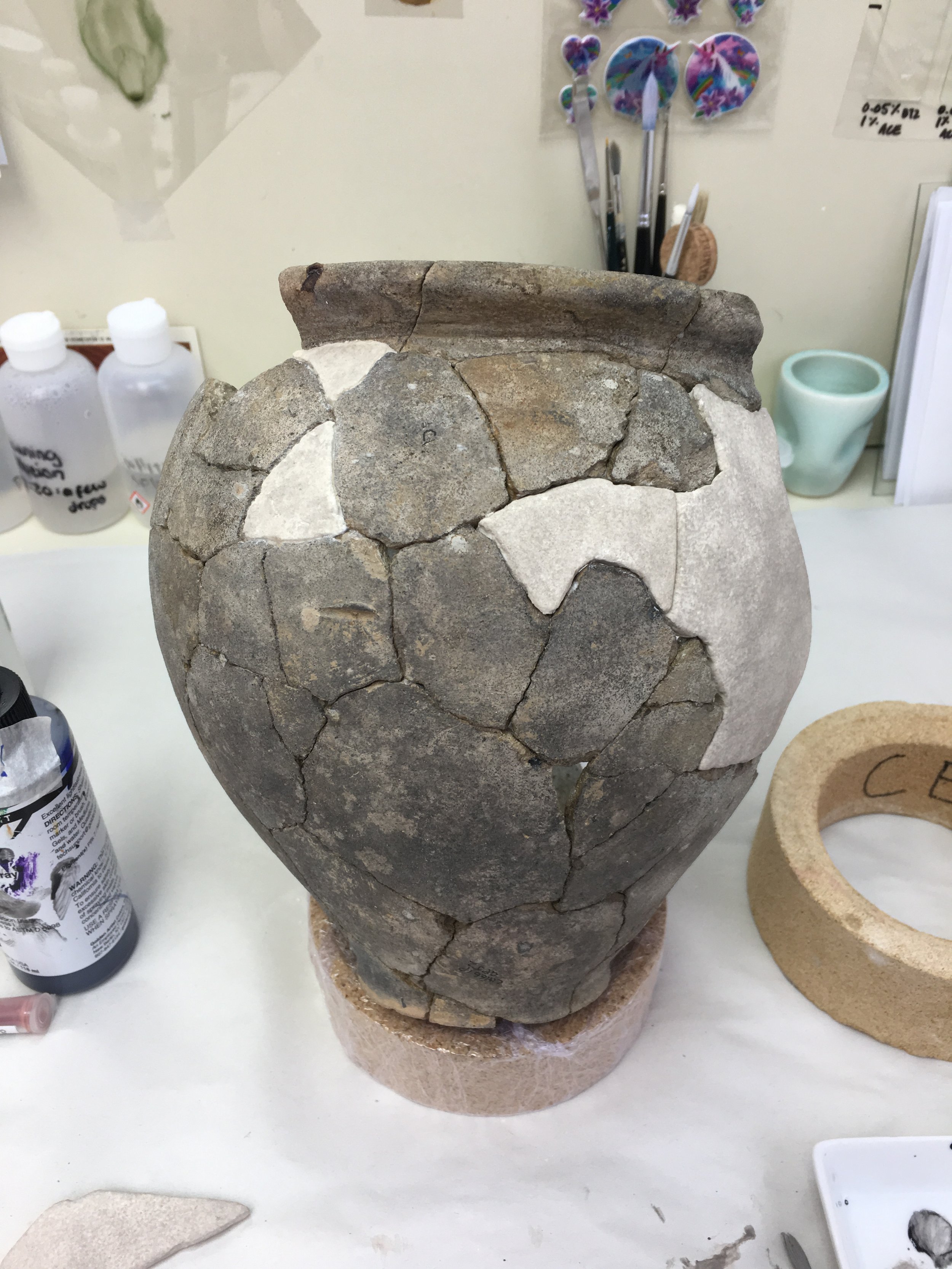
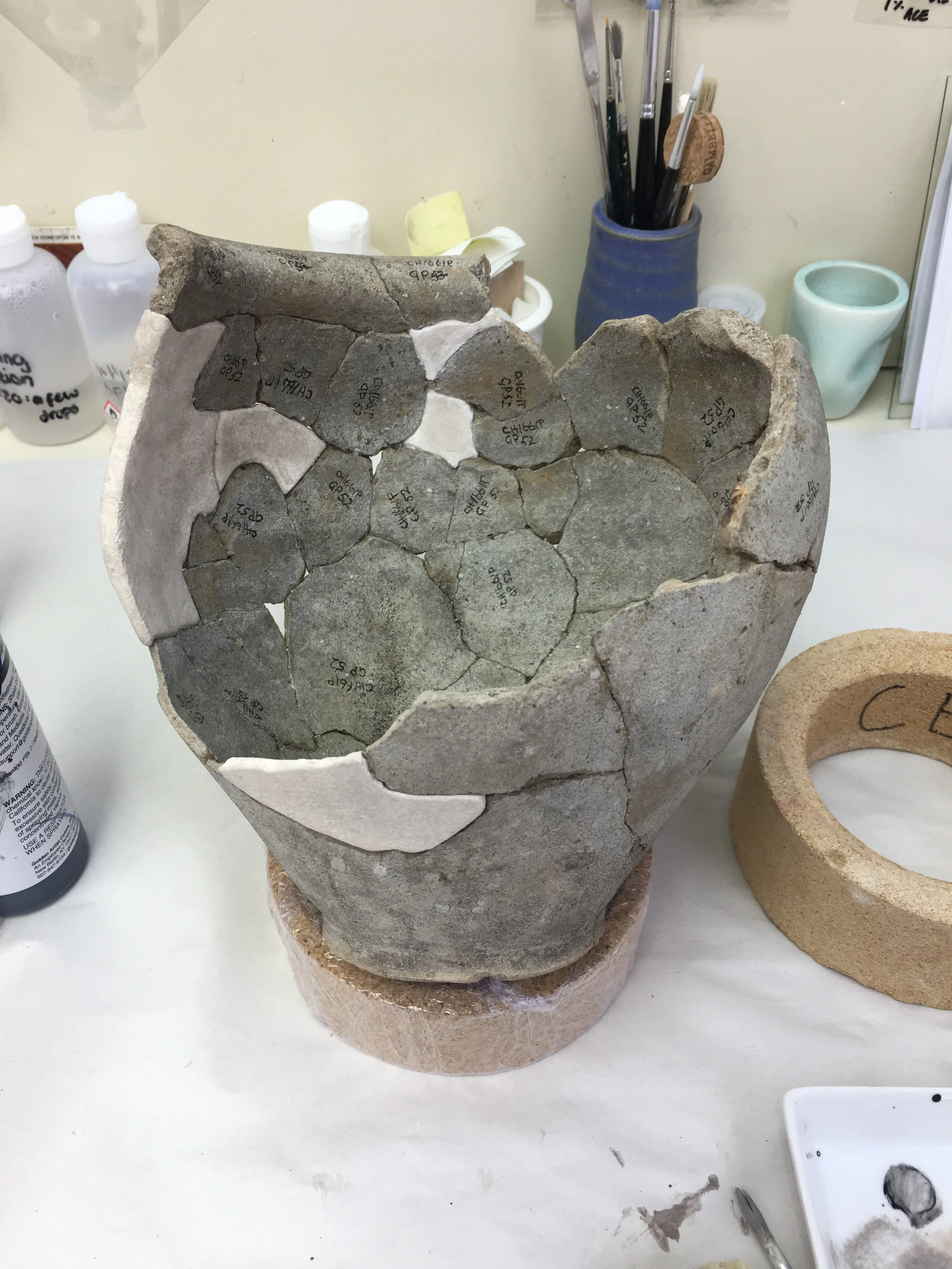
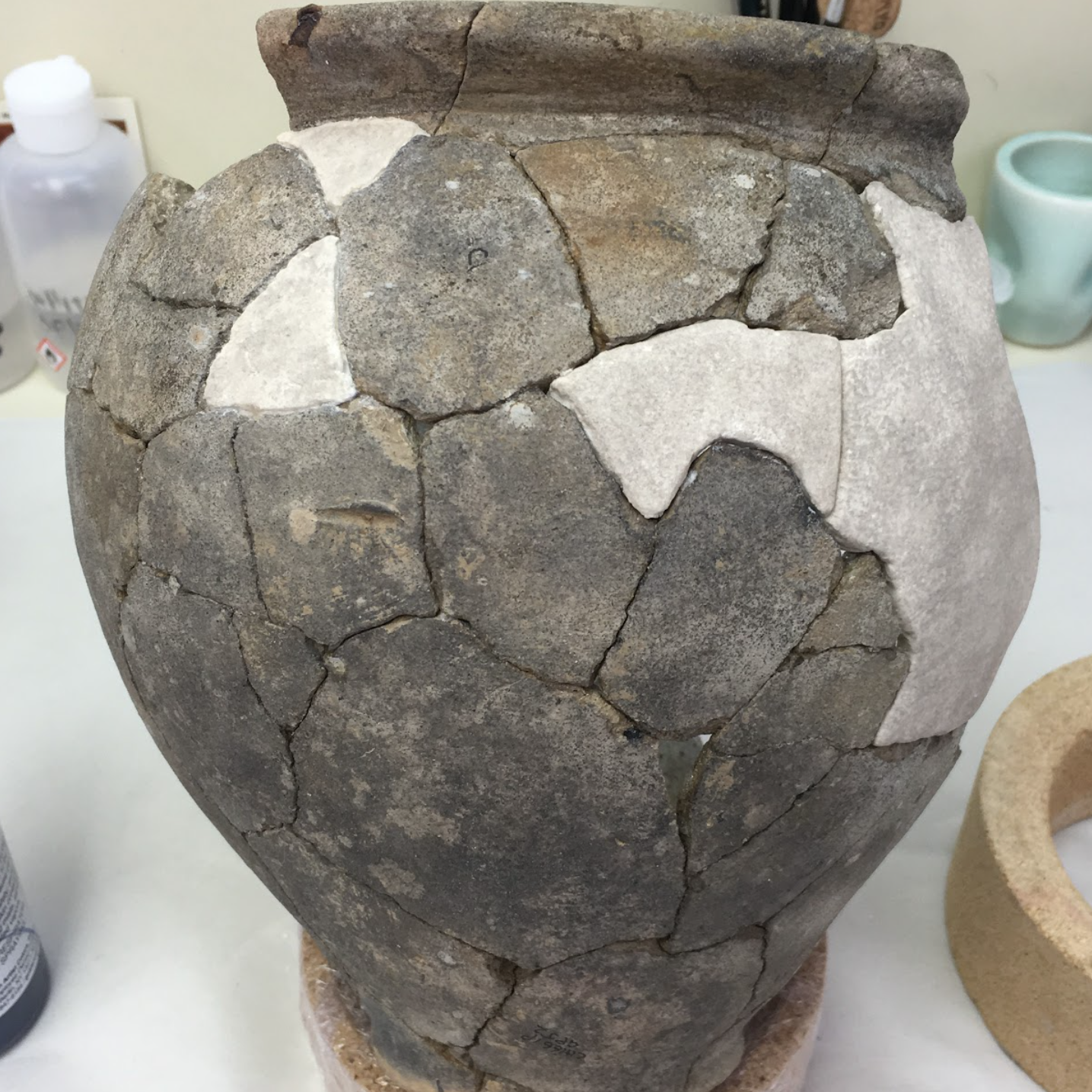
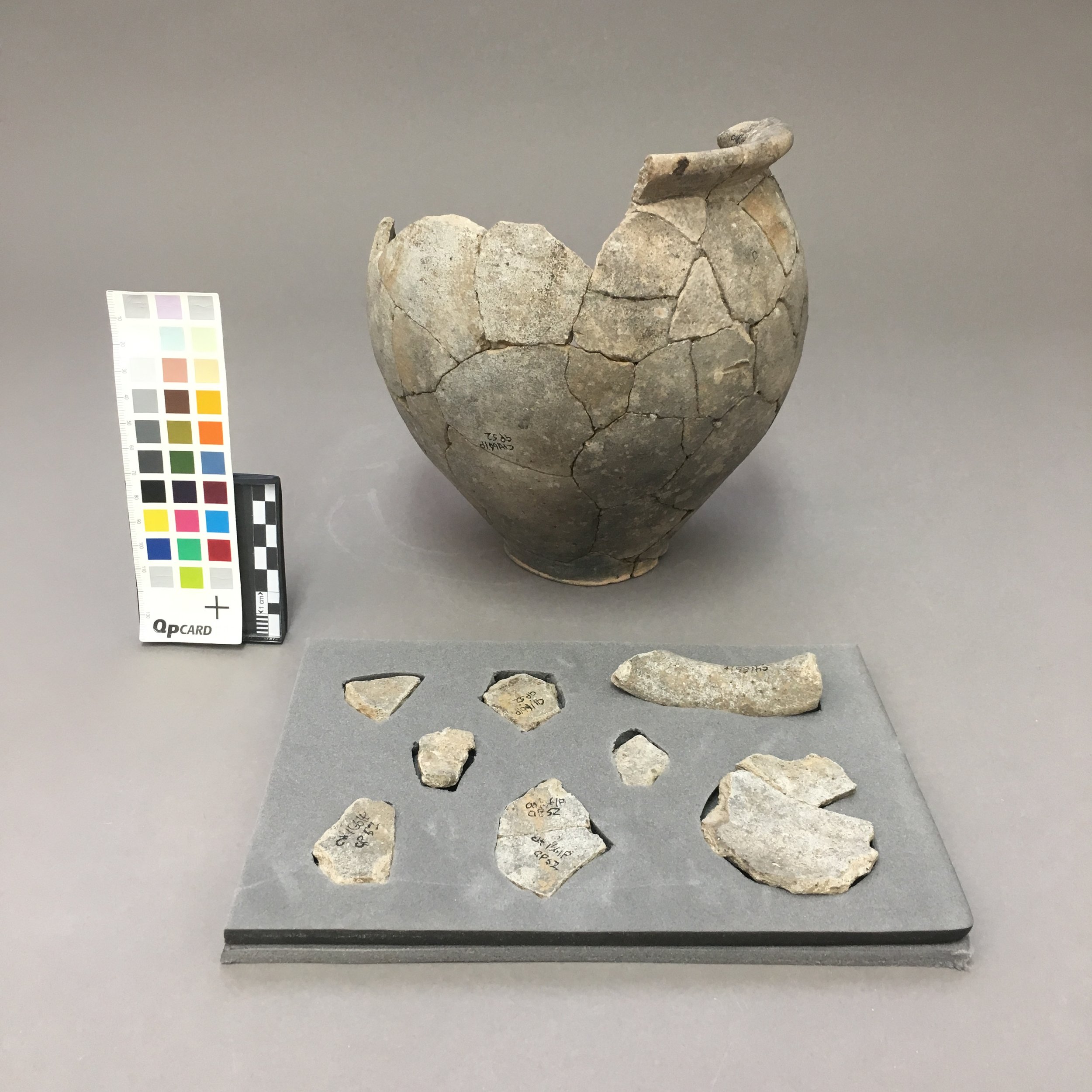
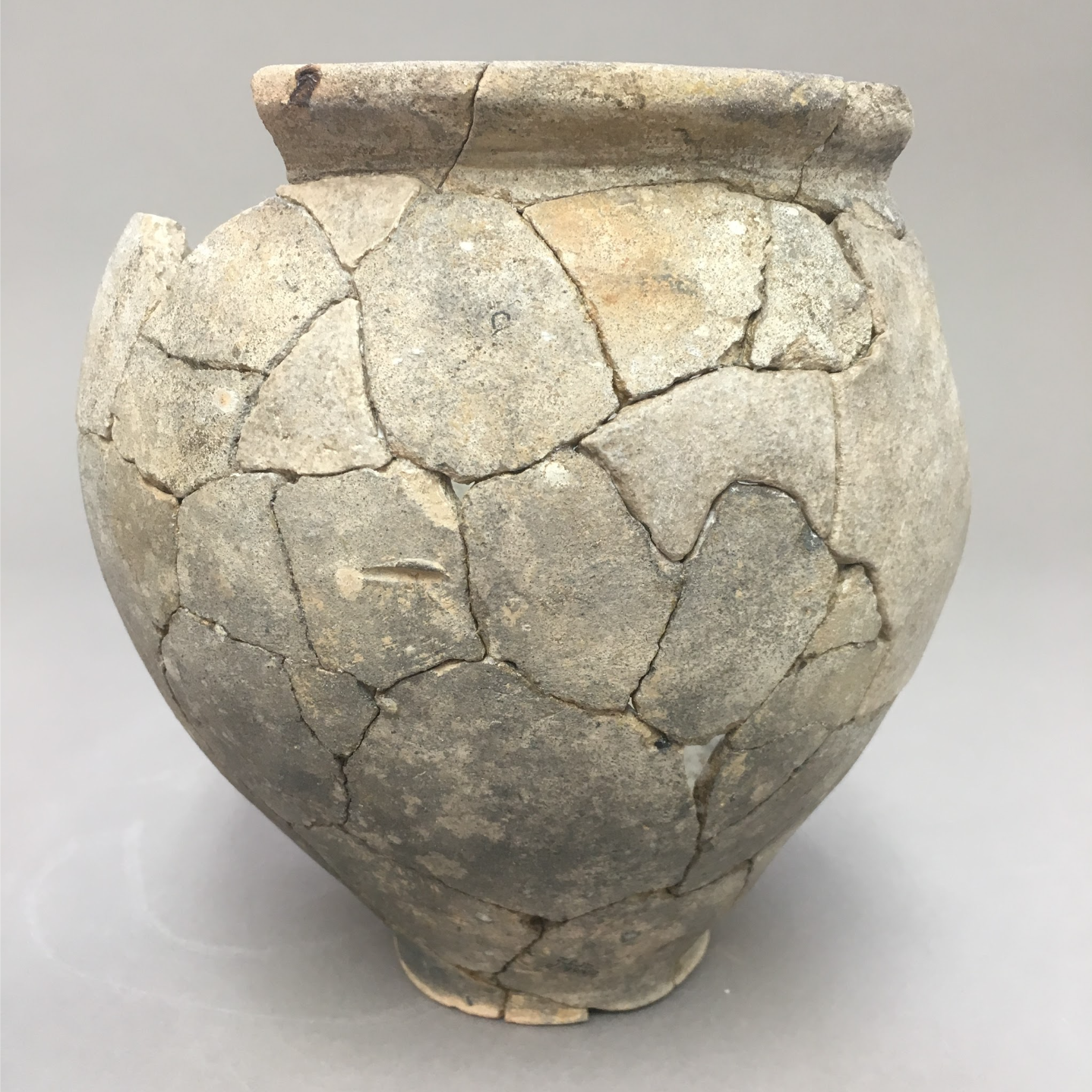
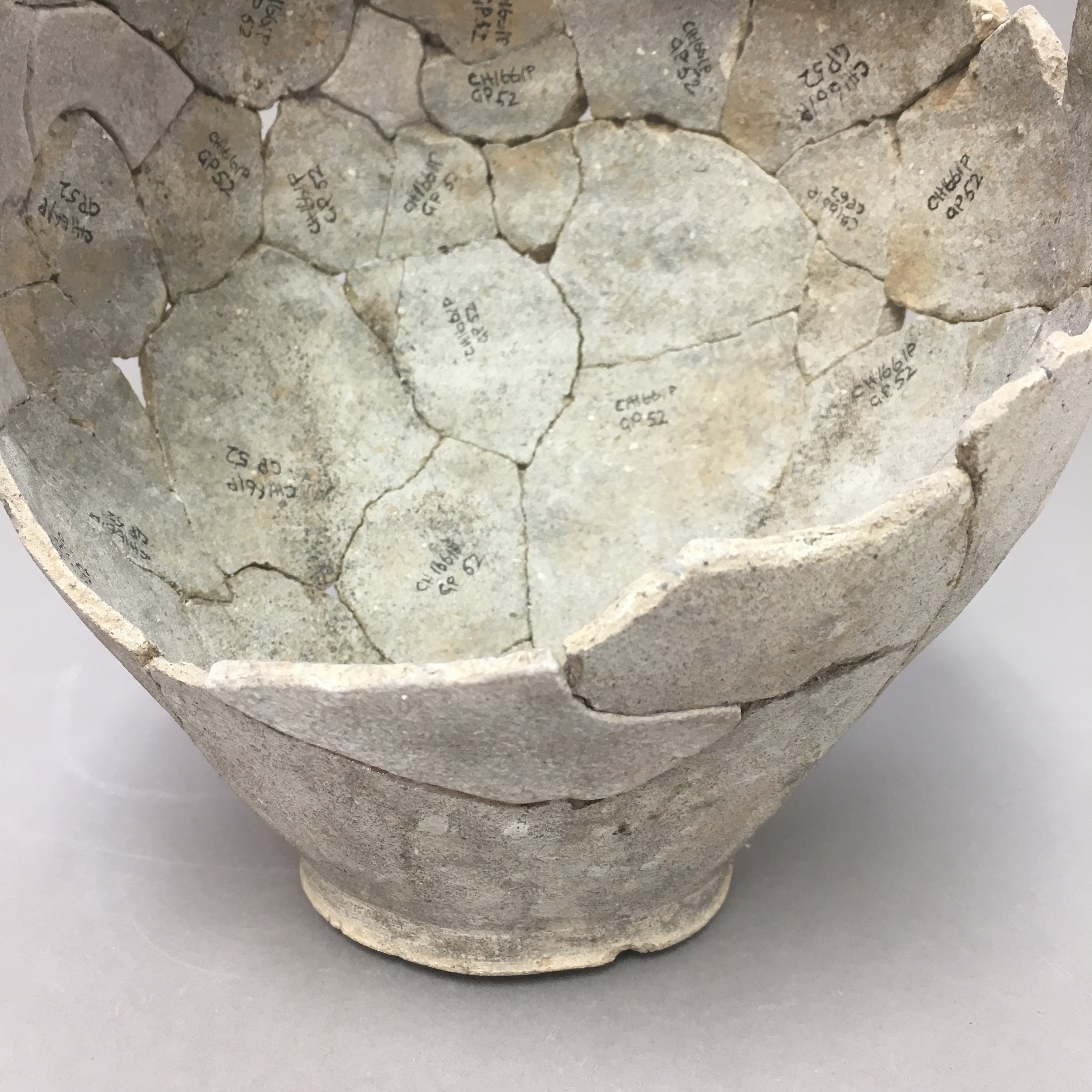
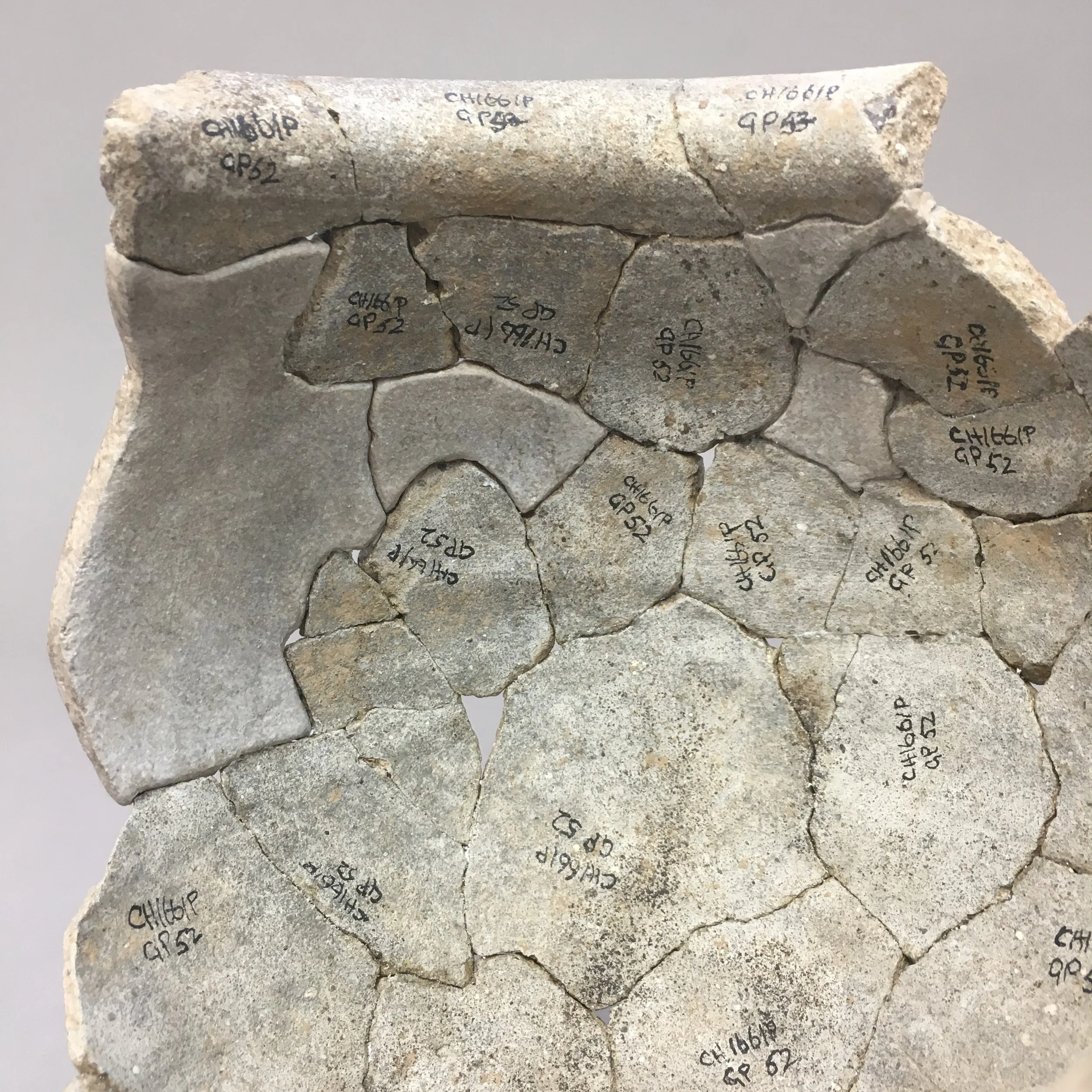
The object id fragmented into 46 shards, and approximately 40% of the urn is not present. Some of the shards appear to be “floating” - they do not fit onto any of the extant break edges of the main section. The urn had been previously bonded with an adhesive that was yellowed and failing. The urn was dismantled using a solvent vapor chamber, and the adhesive was removed from the break edges.
The shards were bonded using 45% Paraloid B-72 in acetone after consolidating friable edges using 15% Paraloid B-72 in acetone. Structural fills were created to support vulnerable shards, especially the rim section. Fills were made using Paraloid B-72 bulked with glass microballoons and were retouched using acrylic paints and dry powder pigments with matte medium. The large area of loss was not filled in case additional shards are discovered in the future.
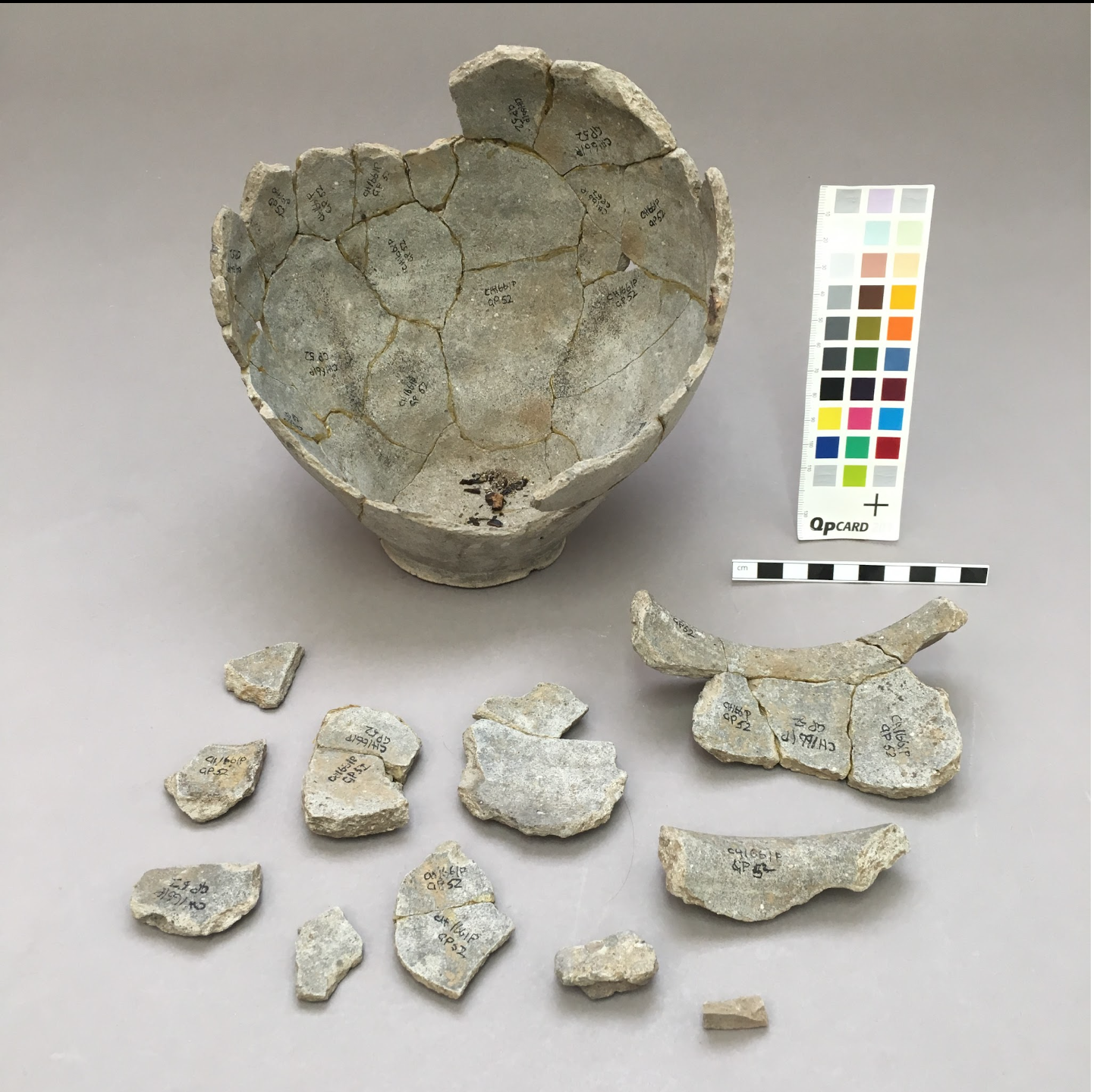
Before Treatment
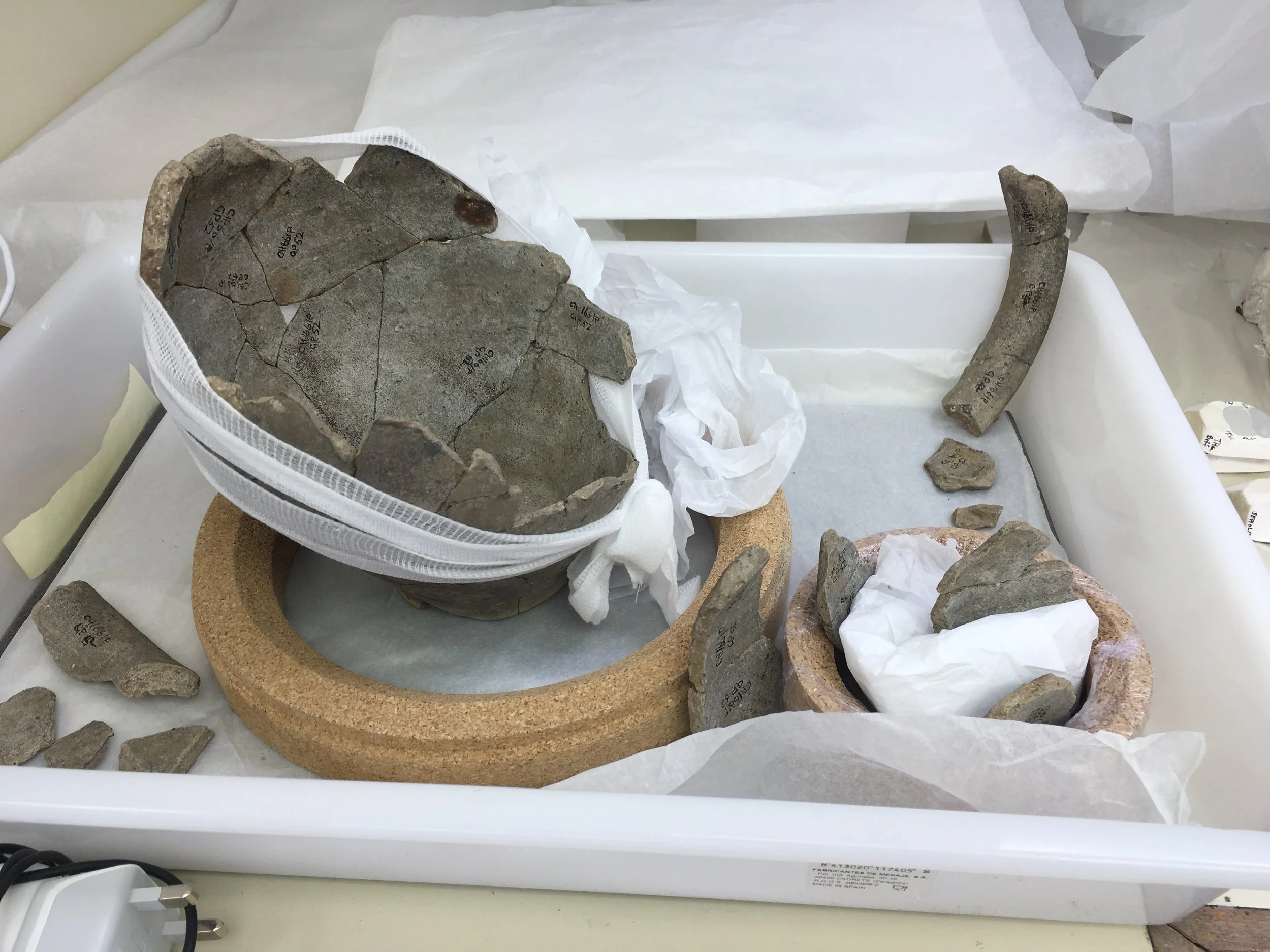
During Treatment
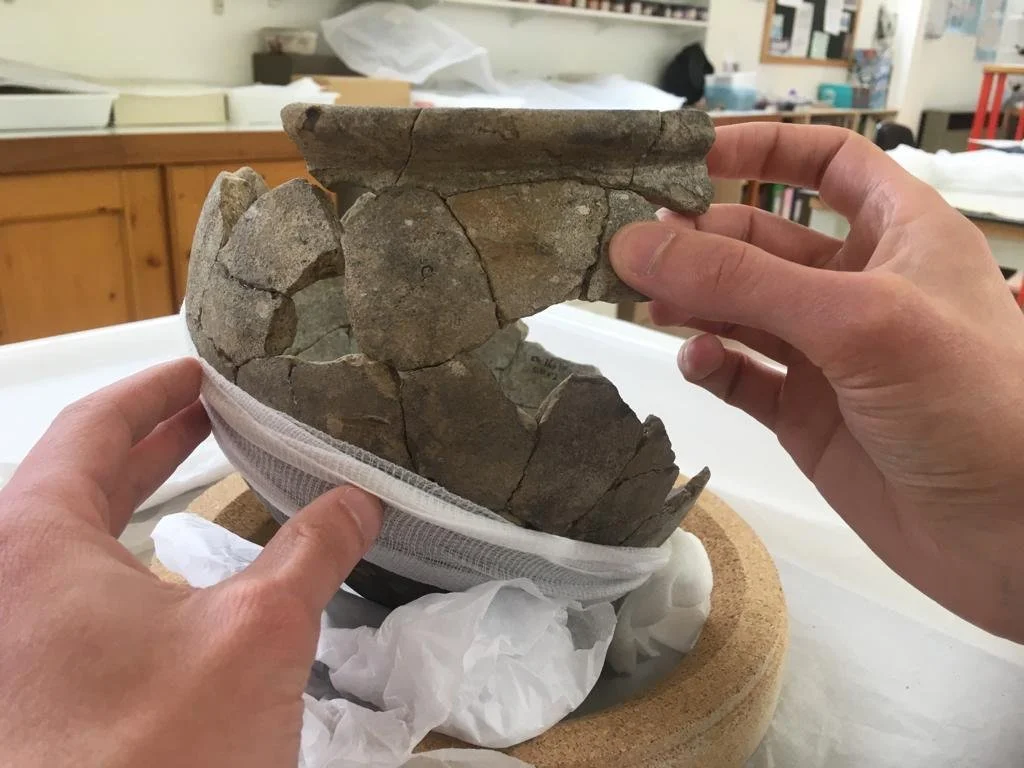
During Treatment
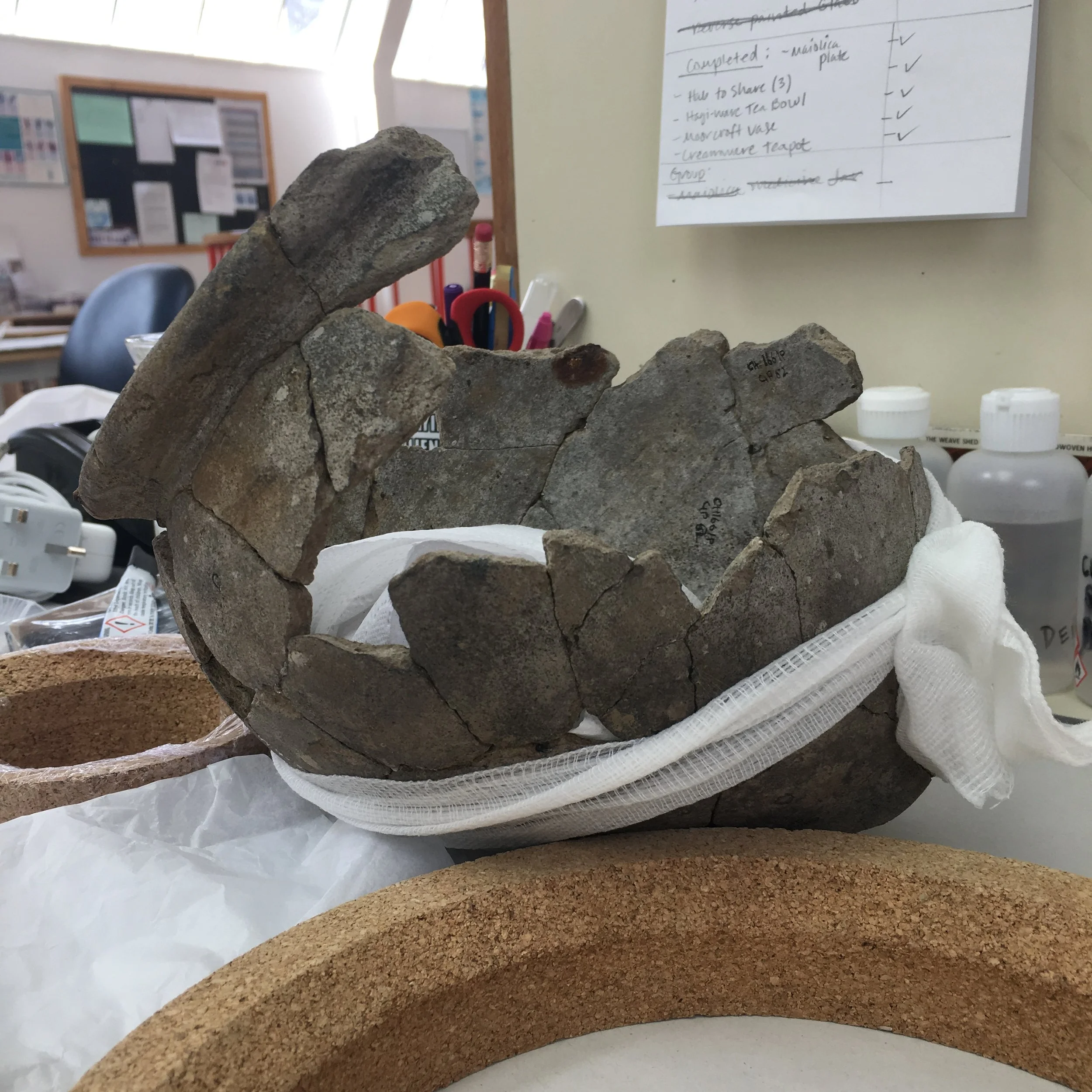
During Treatment
During Treatment
During Treatment
During Treatment
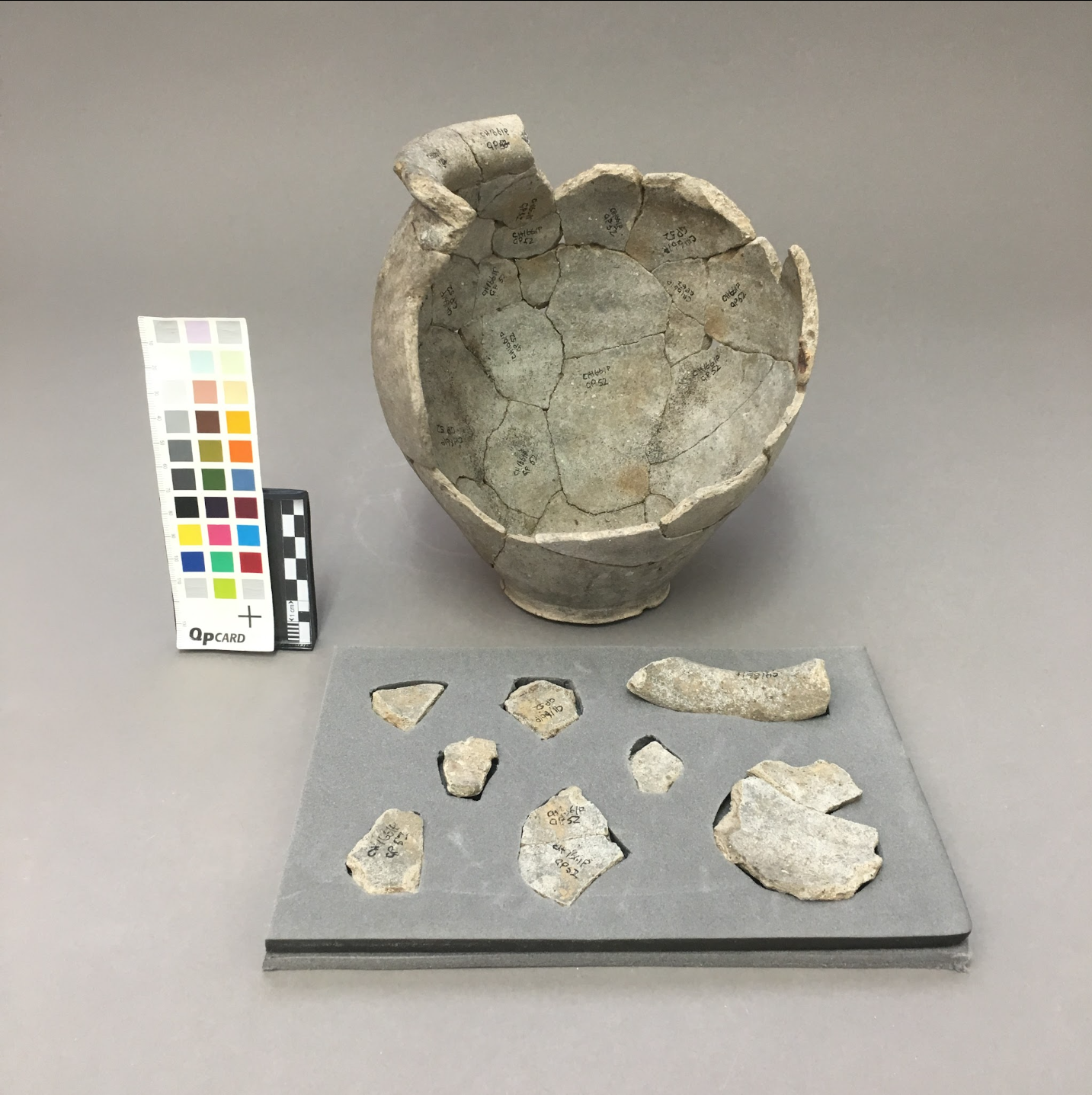
After Treatment
After Treatment
After Treatment
After Treatment
After Treatment